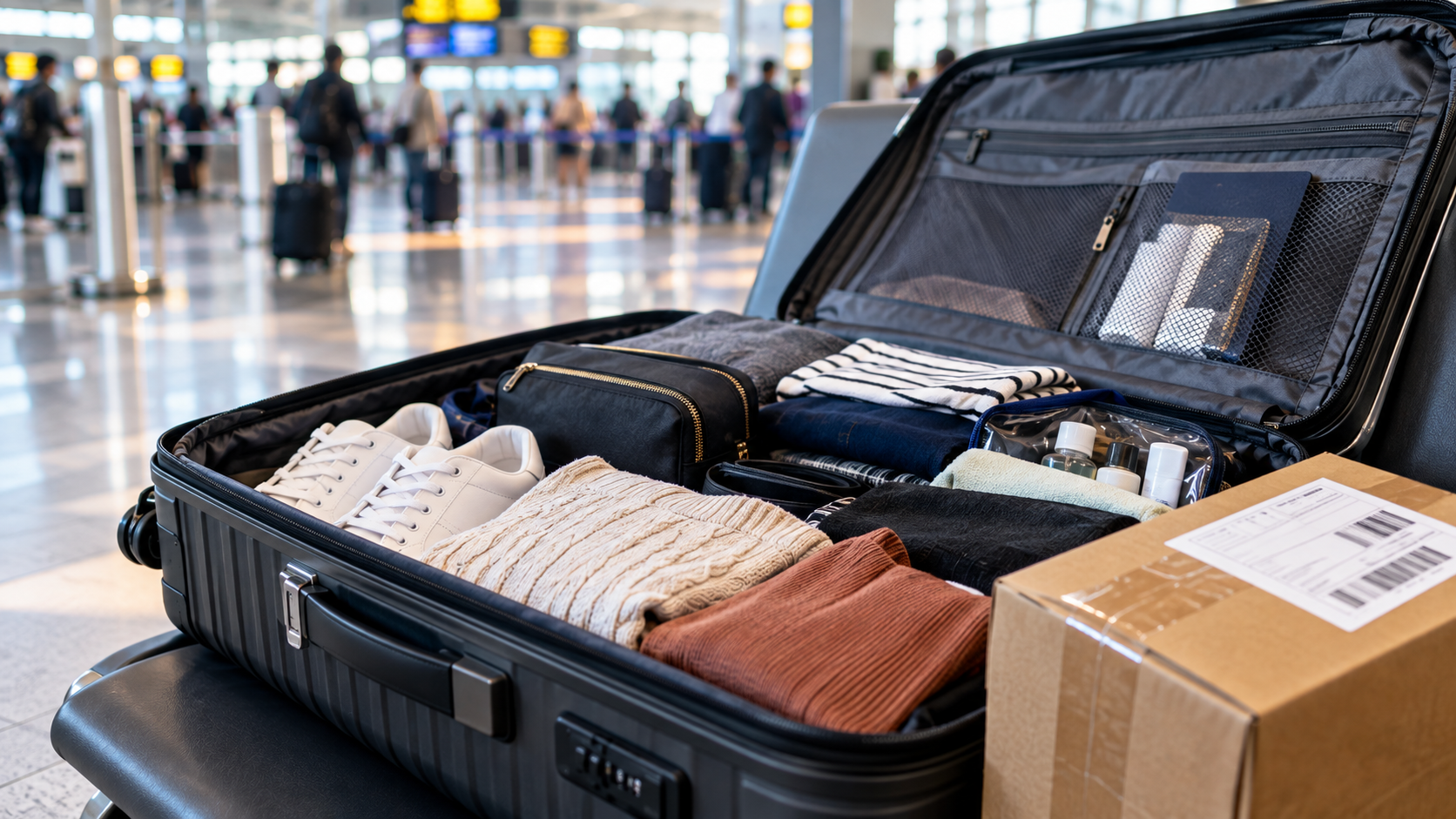
Finding a traveller going to your destination can open another way to move a parcel. But matching a route is only the beginning. Before a parcel goes into someone else’s luggage, the sender and traveller need to know what is being carried, whether it is allowed and what happens at the border.
This is where traveller-based delivery differs from simply giving a package to someone you know. The traveller is crossing an international border, so airline, security and customs requirements still apply.
The safest approach is simple: describe the parcel honestly, check the rules before handover and make sure everyone understands the arrangement.
What can a traveller carry?
There is no single list of items that every traveller can carry. Acceptance depends on the airline, route, destination-country rules, security requirements and the nature of the item.
Everyday personal items may be straightforward, but extra care is needed with:
- Food, fresh or homemade products and agricultural goods
- Medicines, supplements and medical equipment
- Liquids, aerosols, perfumes and flammable products
- Phones, laptops, power banks and spare batteries
- Cash, jewellery and other high-value goods
- Alcohol, tobacco and controlled or restricted products
- Seeds, plants and animal products
If you are unsure about an item, check the airline and relevant destination-country requirements before the parcel is handed over.
Power banks and batteries need particular attention
Battery-powered items can have specific aviation requirements. IATA guidance states that spare lithium batteries and power banks are carried in cabin baggage rather than checked baggage, subject to applicable requirements and airline rules.
That means a sender should never assume that an electronic item is acceptable simply because it fits inside a suitcase. The traveller should check the current rules for the specific airline and journey before agreeing to carry it.
Why the parcel description matters
When someone else is carrying your parcel, accurate information protects both people. The sender should be able to explain what is inside, how many items there are, whether they are new or used and, where required, their value.
“Gift” or “clothes” may be too vague. A clearer description tells the traveller what they are agreeing to carry and gives customs authorities better information if the parcel is examined.
Customs systems depend on accurate information. The World Customs Organization emphasizes the importance of customs data being timely, accurate, complete and consistent.
Never change the description or declared value simply to make an item appear cheaper or easier to carry. The information should match the parcel.
What about customs?
Putting a parcel inside a passenger’s luggage does not automatically remove customs requirements. International borders still apply, and the rules depend on the country, the contents, the value and the purpose of the goods.
For example, UK government guidance distinguishes between personal goods and commercial goods and states that commercial goods brought into Great Britain in accompanied baggage must be declared. The exact requirements vary according to the journey and goods.
For a traveller-based match, the sender and traveller should agree who is responsible for providing the required information and dealing with any applicable charges. When the rules are unclear, check the destination-country customs requirements before travelling.
Trust matters as much as the route
Traveller-based delivery works because two people who may not know each other agree to rely on one another. That makes trust a practical part of the transaction—not an optional extra.
Before agreeing to a match, check the following:
- Does the traveller have a clear route and travel date?
- Have the parcel contents been fully disclosed?
- Has the item been checked against the specific journey’s restrictions?
- Are the price and payment process clear?
- Is the handover location and time agreed?
- Does the recipient know who will contact them?
- Is there a record of the booking and handover?
What if the parcel is not suitable for a traveller?
That does not mean there is no delivery option. A logistics carrier may be more suitable for a large shipment, business stock, a regulated item or a sender who needs a defined collection and delivery service.
The point of a marketplace is not to make every parcel fit one delivery method. It is to help the sender discover the option that fits the parcel.
How Parcsal helps create a clearer process
Parcsal connects senders with independent travellers and logistics carriers through a cross-border marketplace. Users can start with their route, parcel details and preferred timing, then explore available options.
The platform helps bring important parts of the process into one place, Everything from discovery, comparison, communication, booking, payment, tracking and reviews, alongside trust and verification features are made available.on Parcsal.
Note: Parcsal does not physically carry every parcel. Its role is to make suitable delivery options easier to discover and manage.
Before handing your parcel to a traveller
Before you hand over your parcel to a traveller ensure that you have checked the following:
- I know the traveller’s departure and destination.
- The travel date and expected arrival are clear.
- I have described every item accurately.
- I have checked restrictions for the item and route.
- The parcel is packed appropriately for the journey.
- I understand the agreed price and payment arrangements.
- The handover location and time are confirmed.
The recipient’s name and contact details are correct.
I have kept the booking and handover information.
The traveller has confirmed that the item is acceptable for their journey.
Frequently asked questions
Can a traveller carry a power bank for me?
Power banks are subject to specific aviation rules. IATA guidance says spare lithium batteries and power banks must be carried in cabin baggage rather than checked baggage, subject to the applicable rules. Always check the airline’s current requirements.
Does traveller delivery mean there are no customs requirements?
No. The parcel is still crossing an international border. Required declarations, restrictions, duties or taxes may apply depending on the route and goods.
Is traveller delivery suitable for business goods?
It can be possible in some circumstances, but commercial goods can have additional customs and declaration requirements. Check the rules for the specific route and goods before arranging carriage.
What if my parcel cannot be carried by a traveller?
You can explore logistics carriers on Parcsal. The marketplace is designed to help senders compare different types of delivery capacity rather than relying on one method.
The right parcel needs the right journey
Traveller-based delivery is not about putting every parcel into every suitcase. It is about matching suitable parcels with suitable journeys while respecting the rules that make international travel safe and lawful.
If the parcel fits the journey, the item is permitted and the people involved have a clear agreement, traveller capacity can become another option for cross-border delivery.
Ready to explore your options?
Enter your route and parcel details on Parcsal to discover available delivery options from independent travellers and logistics carriers.